Across Western democracies, governments and elite policy networks are increasingly bundling digital identity systems with “anti-misinformation” and “online safety” agendas, treating both as mutually reinforcing components of a new information-governance architecture.
This is increasingly visible in foreign bodies: the European Union, Australia, Canada, and the globalist World Economic Forum (WEF) ecosystem, where identity-verification and speech-regulation are being fused into a single policy narrative. The ultimate goal: restore “trust” online.
For example, the Digital ID and Authentication Council of Canada, a state-created nonprofit dedicated to promoting “digital trust tools” including digital ID, has begun recommending such tools to the Canadian parliament as a critical component in the fight against “misinformation.
This fusion is rarely announced openly. Instead, the public is told one story—security, convenience, citizen empowerment—while policymakers simultaneously frame digital identity as a mechanism to authenticate users and filter information environments. But taken together, the documents, statements, and regulatory packages reveal a movement toward identity-gated participation in the digital public square.
The EU: Digital Identity + Disinformation = “Democracy Protection”
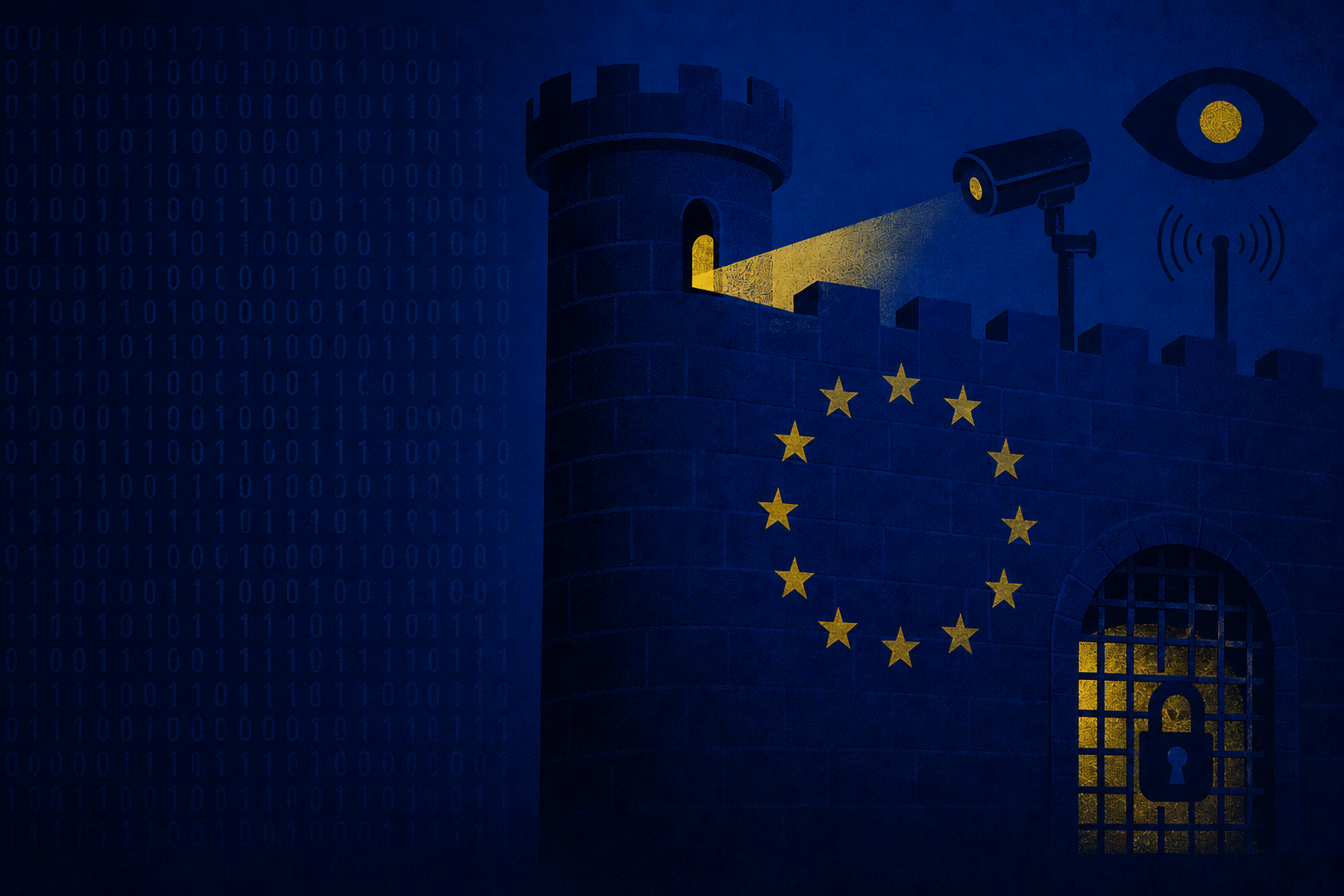
The European Union provides the clearest model. Its new eIDAS 2.0 regulation mandates that every Member State roll out a European Digital Identity Wallet (EUDI Wallet). Formally, these wallets are presented as tools for secure authentication in banking, travel, and public services. But the European Commission does not separate identity from information governance. Instead, it regularly places the EUDI Wallet alongside disinformation countermeasures in the same strategic packages.
The Commission’s “Democracy Shield” initiative, for example, couples three elements as if they are part of a single defense system:
- A Europe-wide digital identity wallet
- A European fact-checking network, and
- Expanded surveillance and analysis of “foreign interference” and “disinformation.”
This bundling is not accidental. EU policy papers bluntly state that anonymity facilitates disinformation, and propose identity-verified avatars or accounts as a solution. The Commission suggests that EUDI-based authentication could protect user profiles and reduce “fake” accounts—implicitly linking identity requirements to content legitimacy.
Academic research analyzing EU digital-identity frameworks goes further, proposing that digital ID frameworks could support signed or “verified” media. Articles, videos, or posts could be cryptographically attached to government-verified identity attributes—“verified journalist,” “verified organization,” “verified public authority.” In effect, the EU is quietly exploring a regime where identity verification becomes a prerequisite for trusted speech.
Australia: Online Safety, Misinformation Laws, and Digital ID as One Package
Australia has taken a similar route, though through different entry points. The government has advanced:
- A sweeping Online Safety Act,
- A proposed Misinformation/Disinformation bill, and
- A rapidly expanding national Digital ID system.
Although each is presented as a standalone reform, public submissions and official rhetoric reveal that these components are understood as interlocking mechanisms.
Australian lawmakers frequently argue that reducing harmful content requires age and identity verification, which in turn requires a robust national Digital ID infrastructure. The three mechanisms – Digital ID, the Online Safety Act, and the misinformation bill – amount to a unified control stack for online speech.
The government has inadvertently reinforced this view by linking all three to the same underlying justification: “restoring trust” online and protecting citizens from harmful or misleading information. When identity becomes the gateway to accessing platforms, independence of speech is inevitably filtered through government-approved authentication channels.
Australia’s Digital ID program was originally framed as a convenience for accessing government services. But as soon as the Online Safety Act created sweeping obligations for platforms to prevent harmful or misleading content, Digital ID became the natural enforcement tool. Platforms cannot “verify ages” or “identify harmful actors” without identity verification. And so Digital ID migrates from voluntary service credential to a de facto requirement for speech-enabling infrastructure.
The WEF: Digital Trust Through Identity-Verified Information Flows
The World Economic Forum sits above both the EU and Australian initiatives by providing the intellectual and corporate blueprint for merging identity systems with information controls. Through its Global Coalition for Digital Safety and “trust and safety” whitepapers, the WEF promotes a globalized model which argues:
- Trusted digital ecosystems require verified users,
- Governments, platforms, and identity-verification companies must coordinate to enforce “digital trust.”
The WEF describes Digital ID as a “foundational” element of what it calls “digital public infrastructure,” arguing that the adoption of Digital ID across the western world could have economic benefits. In one article, the WEF cites McKinsey research claiming Digital ID adoption could “drive gross domestic product (GDP) growth by 1-13%, translating to an estimated $5 trillion in economic gains worldwide.”
At the same time, the WEF continually promotes closer public-private coordination to shore up what it calls the “trust ecosystem” that is threatened by disinformation and AI deepfakes. According to the WEF, “a joint effort of governments, media houses, technology firms and civil society” is required to combat this combined threat.