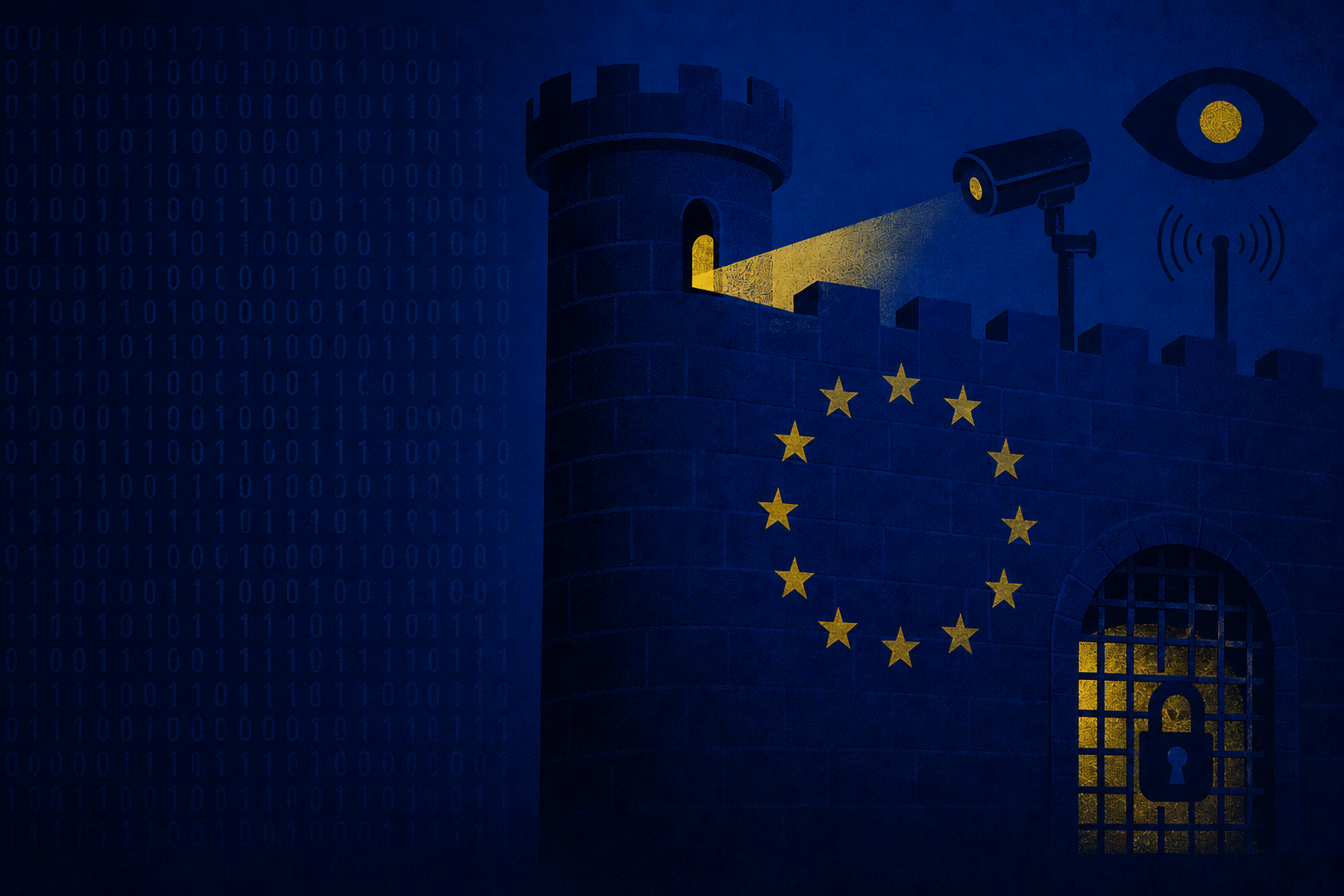
The European Commission announced on December 4 that it will fine Elon Musk’s X €120 million (approx. $140 million) for non-compliance with the Digital Services Act (DSA), the EU’s draconian online censorship regime. The Commission has given X 60 days to provide it with a compliance plan, at the risk of “periodic penalty payments.”
Per the enforcement section of the DSA, the EU can impose periodic penalties up to 5% of a company’s average daily worldwide turnover for each day of non-compliance.
The areas of non-compliance identified by the EU pinpoint three of X’s critical areas of resilience against online censorship:
- Paid subscriber checkmarks, which the EU bizarrely frames as “deceptive design, accusing the company of failing to “meaningfully verify” the person behind the account (this is false – every X user must verify their identity with a form of ID).
- Failing to provide “researchers and civil society” with searchable access to X’s ads repository, which would allow them to easily track the ads running on the platform.
- Failing to provide “researchers” with access to X’s public data, “including through scraping,” limiting researchers’ ability to track speech on the platform.
These categories were not selected by accident. X’s system of paid subscriber checkmarks provides the company with an independent stream of revenue that is immune to advertiser boycotts – a major source of censorship pressure that was weaponized against the company in the early days of Musk’s takeover.
The EU’s determination to give “researchers” access to X’s public data and ad repository has the same motivation. “Disinformation researchers” are the eyes and ears of online censorship – it is they who compile lists of disfavored users, posts, and online narratives that are then passed on to content moderation departments for censorship. And it is they who identify when ads are running alongside disfavored speech – key information for whipping up boycott campaigns.
If a government agency like the NSA directly monitored online speech of everyday citizens at scale, with the purpose of passing it on to content moderation departments for censorship, it would lead to accusations that the U.S. government is in the Stasi-like business of monitoring the speech of its citizens. The larger the department became (the Stasi operated over 91,000 personnel at its height), the greater the accusations.
By farming out the business of monitoring online speech to a vast labyrinth of private-sector companies, university departments, and NGOs – all under the inoffensive title of “disinformation researchers” – the government can give itself plausible deniability against such accusations.
It was disinformation researchers who, with the Department of Homeland Security’s backing, used open access to Twitter and other platforms to censor vast numbers of Americans during the 2020 election. And it is disinformation researchers who are constantly coming up with new and innovative ways to monitor online speech, including the U.S. funded effort to establish a monitoring system for private chats on WhatsApp.
When platforms like X make it harder for disinformation researchers to access their data, it raises the cost of the censorship industry’s speech-surveillance operations. One of the first acts of X after Musk’s takeover was to cut off free access to X’s API to researchers, a move which immediately caused the volume of “research” into speech on X to plummet.

Source – Reuters
That’s why FFO included Musk’s changes to the platform’s API access in Elon Musk’s top ten free speech moments of 2023. The EU seemingly agrees with the importance of this move, which is why it’s using its regulatory power to force Musk to open the platform back up to the prying eyes of “anti-disinformation” professionals.
From FFO’s January 2024 report on Elon Musk’s free speech achievements:
5) Cutting off the Censorship Industry’s API Access
An Application Programming Interface (API) refers to the mechanism by which programs interact with one another. In the context of Twitter/X, this means allowing third party programs to hoover up vast amounts of raw data from the platform for analysis, as well as a number of other potential uses such as automated posting.
One of the first concerns voiced by Election Integrity Partnership founder Alex Stamos about Musk’s takeover was that the vast network of “disinformation research” institutes and nonprofits that form the bedrock of the censorship industry might lose their privileged access to the platform’s API, setting back their efforts to monitor and censor Americans at scale.
His fears were quickly borne out. In 2023, Musk ended researchers’ free access to the API, replacing it with paid access tiers ranging from $100 per month for limited access to $42,000 per month for full access. The introduction of fees caused dozens of “disinformation” research projects to cancel or stall, with Reuters reporting that “nearly every researcher” they spoke to could not afford the access fees.
Without X’s cooperation in handing over data to researchers at scale, the eyes of online censorship are blind. X clearly knows this. So does the EU and other foreign regulators — which is why this is such a crucial battle for free speech online.