In 2025, free speech advocates can point to a genuine turning point—one that would have been difficult to imagine just three years earlier. A series of developments marked meaningful resistance to government censorship, coordinated content moderation, and foreign pressure on American speech norms.
This moment represents a sharp break from the early 2020s, when virtually every major tech platform embraced aggressive censorship and the U.S. government was pouring hundreds of millions of dollars into so-called “counter-disinformation” initiatives.
Actions taken this year by the federal government, technology companies, and private citizens reflect a broad and growing pushback against a formerly U.S. government-led global censorship regime targeting lawful political expression online.
1. Executive Order Restoring Free Speech and Ending Federal Censorship
On January 20, 2025, President Donald Trump signed Executive Order 14149, titled, “Restoring Freedom of Speech and Ending Federal Censorship.”
Strongly influenced by FFO’s preceding three years of investigation into U.S. government funding of online censorship, Trump’s EO directs federal agencies to stop what they believe is government censorship of speech and prohibits federal government involvement in content removal or moderation. The order also bars any federal actions that could impede lawful freedom of expression.
2. State & Treasury Departments Combat Foreign Censors
In late 2025, the Trump administration escalated its response to what it characterized as foreign interference in American online speech. Several European officials, including a former EU commissioner, were barred from entering the United States after U.S. officials said they had pressured American technology companies to censor U.S. viewpoints.
The Treasury Department also sanctioned Brazilian Supreme Federal Court justice Alexandre de Moraes, alleging that he used his position to authorize pre-trial detentions and suppress freedom of speech.
In the same vein, the administration imposed a travel ban on Imran Ahmed, the CEO of the Center for Countering Digital Hate (CCDH), citing concerns about the organization’s role in advocating coordinated content moderation campaigns targeting U.S.-based platforms and speakers.
Under the new administration, the U.S. government is also bringing diplomatic pressure to bear against foreign censorship regimes, making it clear to western allies that they are not in alignment on this issue. The Under Secretary of State for Public Diplomacy, Sarah Rodgers has been particularly vocal about free speech violations abroad, highlighting a string of egregious cases of arrests for online speech in Europe and the UK, and calling attempted censorship of Americans and American platforms by foreign censors a “red line” for the government.
3. FTC Consent Decree Curtails Advertiser Boycotts
Advertiser boycotts, long criticized by free speech advocates as an indirect tool of censorship, were addressed through federal regulatory action. As part of the Federal Trade Commission’s approval of a merger between major advertising firms Omnicom and Interpublic Group, the FTC secured a consent decree prohibiting the companies from engaging in ideologically motivated blacklisting of online publishers. This marked a rare intervention against advertiser-driven pressure campaigns that have historically pushed platforms to restrict otherwise lawful speech.
4. X Wins Free Speech Victory in Court
X also scored a legal victory in its challenge to California’s AB 587 transparency law. The platform argued that the statute violated the First Amendment by compelling disclosure of detailed content moderation policies. The law had a similar purpose to the EU’s actions against X – providing a target for censors by revealing the platform’s internal speech moderation systems. The resulting settlement led to key provisions of the law being dropped, a win for both free expression and platform autonomy.
5. Tech CEOs Expose Secret Government Censorship Pressure
Throughout the year, prominent technology executives publicly disclosed what they described as secret government efforts to pressure platforms into censorship. In July, X owner Elon Musk said he refused a confidential agreement proposed by the European Union that would have required X to quietly censor speech to avoid fines. Musk claimed other companies accepted similar deals, while X became the first platform fined under the EU’s Digital Services Act, facing penalties of roughly $140 million.
Telegram founder Pavel Durov said he also rejected a comparable proposal, claiming that a Western European government urged him to silence conservative voices in Romania ahead of a presidential election. In a public message, Durov argued that democracy cannot be defended through censorship. Durov later specified that the request came from France’s intelligence agency, the DSGE. Following Durov’s comments, DGSE officials denied making such a request.
6. 4chan Defies British Censorship Authorities
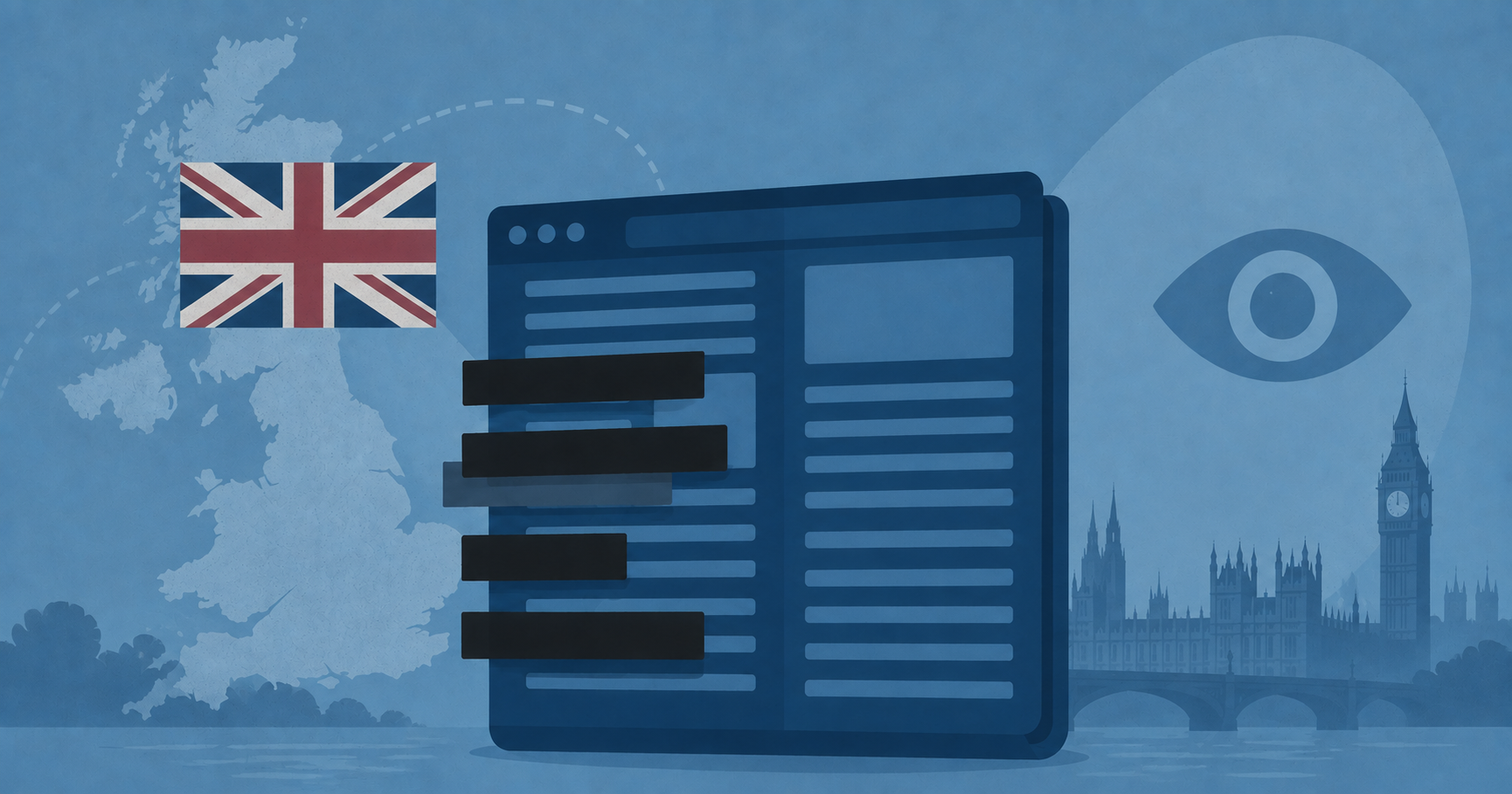
The anonymous imageboard 4chan became one of the first sites targeted by the United Kingdom’s online regulator, Ofcom, under enforcement of the Online Safety Act. 4chan’s legal representative, Preston Byrne, responded that UK enforcement actions are not binding in U.S. courts unless litigated on American soil. Byrne said he declined to engage seriously with Ofcom’s warning letters, instead responding with “pepe memes,” a gesture widely shared online as symbolic defiance.
7. Campaign Against Censorship Laws Bridges Political Divides
Overseas, opposition to government-led tech censorship has now become a bipartisan affair, with critics of censorship laws crossing political and ideological boundaries. A coalition of liberal-aligned digital rights groups, including the Open Rights Group and the Electronic Frontier Foundation, called for repeal of the UK’s Online Safety Act. The Guardian, the UK’s leading liberal newspaper, published multiple op-eds critical of the law, including critical commentary from left-wing writer Taylor Lorenz.
At the same time, Reform UK, a populist center-right party, consistently leading in the polls, has pledged to repeal the Act, labeling it “borderline dystopian.” Similar dynamics played out in Germany, where the right-leaning AfD party, an opponent of the EU Digital Services Act, also leads in polling, underscoring widening public opposition to expansive online speech regulation.