In the early days of the platform censorship era, the favored approach was relatively blunt: ban big accounts, remove posts, issue takedowns of disfavored narratives, or suspend users whose content crossed certain lines.
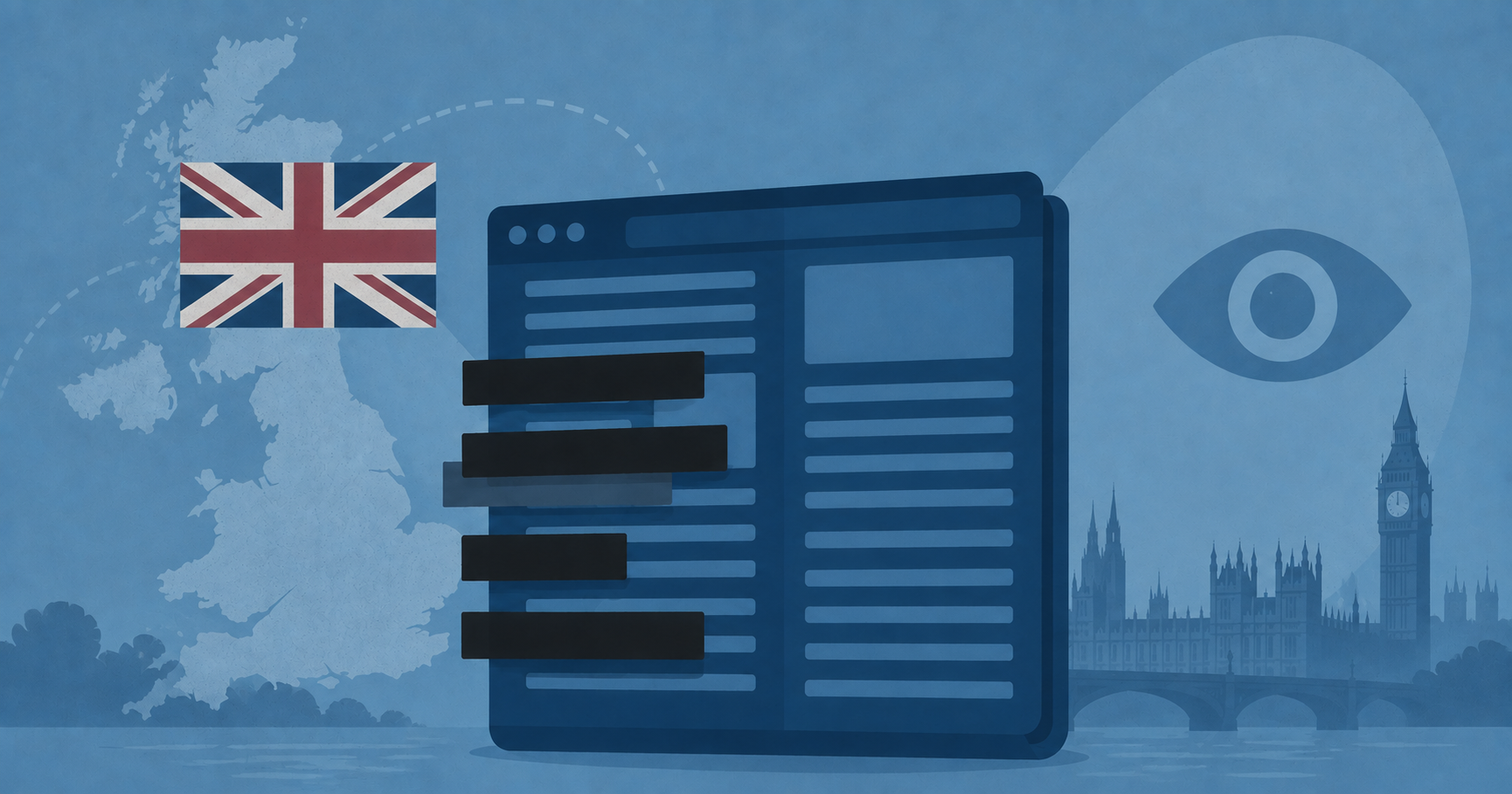
As this approach has become unpopular, the censorship industry now aims for something more insidious: rather than outright removing speech, the new paradigm is to subtly manipulate how content is surfaced, engaged with, or suppressed — all under the guise of “algorithmic civility,” “quality filtering,” or “counter-disinformation.”
Visible and invisible censorship (commonly known as shadowbanning) have always existed side-by-side. But in the early years of censorship, the latter received scant attention compared to the more visible bans on major personalities and narratives.
Few could miss the bans and suspensions of major conservative and anti-establishment figures like Donald Trump, Robert F. Kennedy Jr, Alex Jones, Donald Trump Jr., and many others — nor the suppression of free speech-friendly platforms like Parler, which was banned from both major app stores as well as Amazon, its web hosting provider, in January 2021. These were all major news stories that captured national attention.
The banning of specific narratives, like criticism of official COVID-19 policies was also hard to miss, and engendered a public and political backlash. Google’s recent apology to creators banned under its COVID-19 policies, which it says was a result of government pressure, shows how this surface-level censorship can backfire and eventually result in a U-turn.
As a result, pro-censorship organizations are now moving quickly towards the less visible approach: advocating for difficult-to-detect, design-level tweaks to ensure disfavored content is suppressed.
Why the Shift Matters
Opacity & Deniability: It is far harder to detect or challenge a downranking than an outright ban. Users might not even perceive that a post was suppressed; they’ll just see that it “didn’t get traction.”
Scalability & Automation: Once these ranking systems are in place, they scale effortlessly, enforcing preferred speech norms across billions of users.
Narrative Control Without Backlash: Rather than appearing as heavy-handed censorship, the new methods masquerade as hygiene — “keeping discourse civil,” “refining quality,” or “nudging healthier engagement.” That makes them politically palatable and harder to resist.
Preemption of Mobilization: The holy grail of online censorship is the ability to stifle narratives before they became powerful. Design tweaks hope to achieve this: you don’t need to ban content once people react — you just make sure it never reaches them in the first place.
From Narrative Bans to Algorithmic Steering
The Foundation for Freedom Online has extensively covered how the U.S. federal government, prior to the current administration’s decision to abolish federal censorship, spent nearly a decade building a global capacity for surface-level censorship. They didn’t just remove isolated posts; they pressured platforms to re-engineer their Terms of Service to ban all types of speech that didn’t meet official government guidelines, from COVID-19 policies to “election integrity.” Thanks to government pressure, entire categories of political discussion were openly and pre-emptively banned before they could spread and take hold.
With this approach having been rejected by the new administration and denounced by the same tech giants who were pressured to go along with it, the censorship industry is shifting to a more subtle approach aimed at tweaking the design of social media platforms rather than highly visible acts of surface-level censorship.
Newer methods to control the flow of online information focus less on banning and more on ranking — deprioritizing, downranking, or filtering content in algorithmic feeds so that, in practice, it has minimal reach. The Knight-Georgetown Institute’s Better Feeds report is a case study in how such design tweaks are being pitched as benign or even virtuous reforms. It urges platforms to adopt three algorithmic strategies: bridging (boosting “positive dialogue” favored by multiple perspectives) and quality-based sorting (demoting posts flagged as “toxic”).
In this model, content isn’t removed — it’s just buried. A user might still post something disfavored, but the algorithm ensures it never goes viral, never shows up in many feeds, never gains traction. And when these decisions are handled invisibly by AI models or shadow filters, users rarely see them and often don’t realize they’re being censored indirectly.
Of course, all algorithms prioritize and de-prioritize certain types of content, in part to increase user engagement and attention. But the mission statements of organizations like Knight-Georgetown indicate that the goal is the same as that of the surface-level censors: suppress “disinformation” and “toxicity,” the usual pretexts used by disinformation researchers to suppress politically disfavored speech.
Legitimizing the Design Tweaks
A key feature of modern censorship is that it’s cloaked in neutral-sounding language: “quality,” “toxicity,” “engagement health,” “user surveys,” “civic discourse.” The Knight-Georgetown approach explicitly frames the goal as making algorithmic feeds kinder, safer, more civil and less inflammatory.
The hope is that such language softens resistance, allowing powerful actors to make platform changes that, in practice, suppress disfavored speech but are presented as public-interest improvements.
These groups also push for regulatory support. KGI is already promoting toolkits to state lawmakers aiming to compel platforms to adopt these design changes.
In other words, censorship is shifting from a top-down takedown model to a bottom-up architecture model: design the platform so it self-censors through incentives, ranking choices, and automated filters.