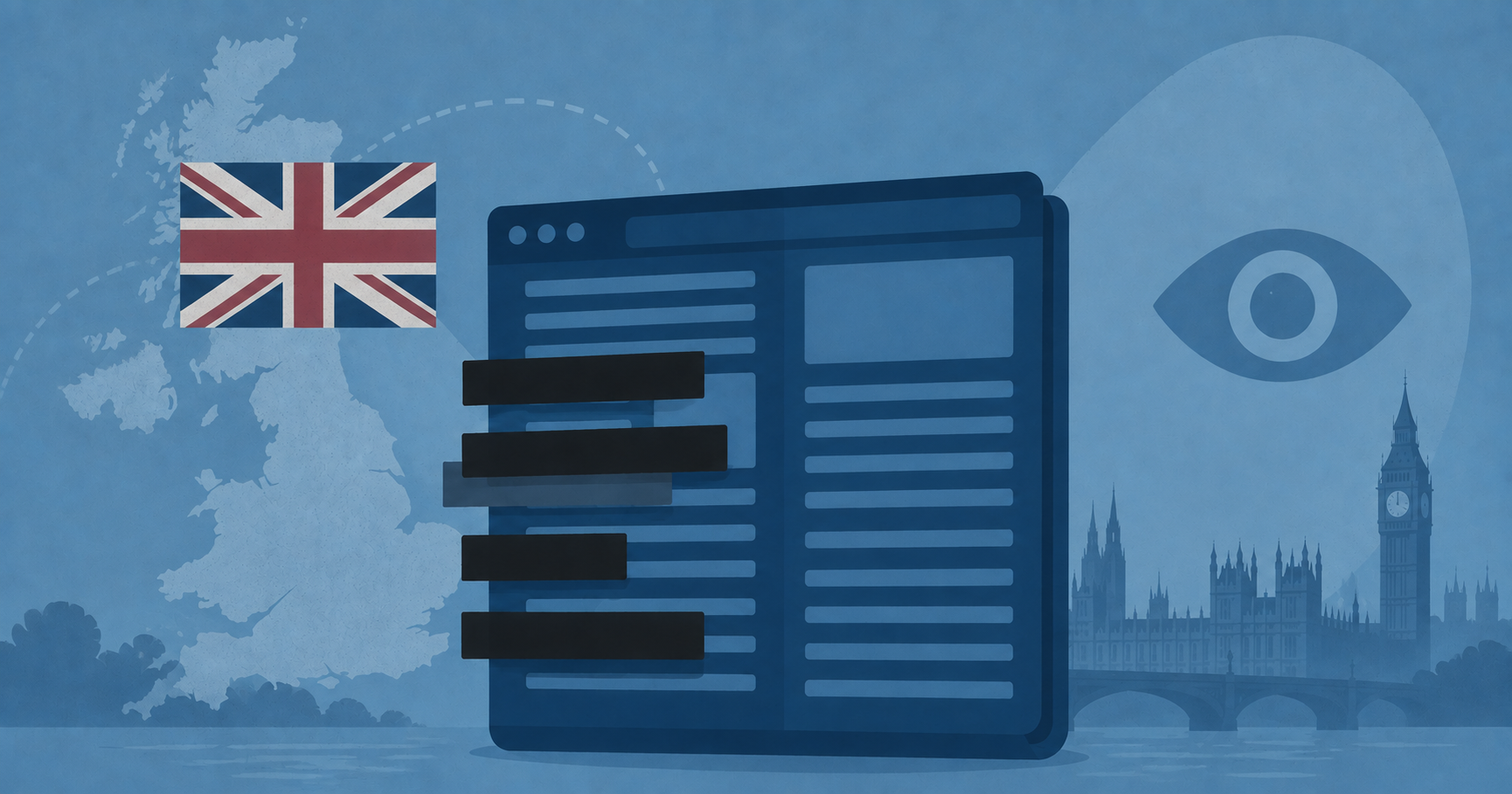
A European nonprofit that was supported by American taxpayers via the Biden Administration’s office of Public Diplomacy at the State Department, credited civil society for convincing the European Commission to issue its $140 million fine against X, the first such penalty levied under the EU’s Digital Services Act (DSA).
“Civil society” is shorthand for the tangled global web of western nonprofits, research institutes, pressure groups, and grassroots organizations, often funded by national governments including the US. Though nominally independent of governments, in practice “civil society” plays a central role in advancing the aims of entrenched western bureaucratic regimes.
With hundreds of millions of dollars in backing from the US government from 2017-2024 to fight “disinformation,” these organizations were the tip of the spear creating a global pressure campaign targeted at governments, tech companies, advertisers and legacy media to create the conditions enabling the mass online censorship of American political speech.
In leaked recordings of an online summit held on February 19, obtained by the Foundation for Freedom Online, a member of one such organization – the EU Disinfo Lab – highlights a case study of precisely the strategy mentioned above: civil society pressuring the European Commission to issue its $140 million fine against X.
Civil society is on the frontlines of fighting disinformation and enforcing the DSA. We see that in the recent decision the Commission took against X, [where] we see that many of the evidence was provided by Civil Society organizations. We also see some successful examples of enforcement on the national level, like the Bits of Freedom case against Meta.
The Commission’s fine was targeted directly at X’s capacity to resist the demands of the censorship industry. It penalized X for its system of subscriber checkmarks, which provides the platform with a revenue stream independent of advertiser boycotts that are frequently employed as a cudgel to beat tech platforms into submission on matters of content moderation.
The Commission also demanded that “civil society” – the same interest group that, according to EU DisinfoLab, pushed for the fine in the first place – to be able to search X’s ad repository as well as its public data, allowing “counter-disinformation” organizations the means to identify which advertisers ought to be pressured for appearing next to disfavored speech.
The EU Disinfo Lab is well placed to lobby the EU on such matters. The nonprofit is based in Brussels, seat of the European Commission, the highest decision-making body in the EU.
While it is a European organization and funded by a variety of sources, American taxpayers have indirectly played a role in supporting its censorship efforts. Public records reveal that in 2024, the US State Department under the Biden amdinistration awarded $15,000 to an organization to help implement the EU DisinfoLab’s 2024 conference in Latvia.

While small, the amount is only a small part of US involvement in promoting censorship at the European level. As the Foundation for Freedom Online has previously revealed, no fewer than 23 US-funded “civil society” organizations played a role in either the evolution, implementation, or enforcement of the EU’s Digital Services Act. Total US funding to such organizations totaled $15,444,695.
In addition to this, the US International Trade Administration under Biden directly shaped the creation of the DSA, including the specific provisions used to fine X. No fewer than 10 US-EU working groups shaped the EU’s censorship law, issuing joint statements about the need to use government power to penalize “harmful content” online – with US officials apparently paying little regard to the fact that “harmful content” is protected by the First Amendment.
US officials will have been aware that foreign censorship laws, particularly from large jurisdictions like the EU, typically lead to changes in global content moderation policies, which directly impacts American speech.
US funding to civil society organizations engaged in activities that result in the censorship of American online speech was cut off by President Trump in a day-one executive order ending federal censorship, as well as the shuttering or overhaul of several US entities that served as a cash funnel of American tax dollars to “counter-disinformation” orgs, such as USAID and the US Agency for Global Media.
The loss of US funding was identified as a major point of concern for EU DisinfoLab, which hoped to close the gap with European funding.
Why it is important to secure funding for civil society in AgoraEU? Firstly, we all know there are currently a lot of gaps left by non-European philanthropy, mainly US funding that is no longer available. So it is very important to understand that we are not fighting for extra funding – it is about preserving funding that is so important to continue our work. We also know that Europe is constantly facing threats to its information integrity, and right now one of the main instruments against those threats is the DSA. Now, the DSA has promised a safer experience online, and it has also promised that civil society will be directly involved in that goal, and this promise also needs funding.
A further cause of consternation for EU DisinfoLab was another element of the US administration’s dramatic change of direction of online censorship, the travel bans against foreign nationals who have contributed to the censorship of Americans online, such as CCDH’s Imran Ahmed. This is a point that was raised several times during the online panel.
And we also see civil society organizations facing legal threats for the work that they do, like the travel bans earlier this year against the leadership of Hateaid, CCDH, and GDI.
There needs to be extended anti-SLAPP protections and support beyond journalists… Right now when it comes to protections, [AgoraEU] covers only journalists. Especially if we remember the travel bans against civil society, it is very important that civil society… doing very similar work, is also protected against these kinds of threats.
Currently the wording on protections, as it is right now, it only covers journalists and it would not protect civil society such as HateAid and CCDH and GDI.
If the commission wants to show that it really stands with these organizations that are being threatened, it is even more important to have that text expanded and include civil society actors.
Taken together, these clips reveal how intertwined international “civil society” and even EU policymaking is with US policy. The EU Disinfo Lab, a European organization based in Brussels that seeks to influence the European Commission, once enjoyed the favor of the US government, which supported one of its conferences and shared its aims in persuading the EU to adopt its draconian censorship regime. Even though US policy has changed, the work of foreign civil society organizations continues, with EU support and funding, directly impacting American tech companies and American free speech.